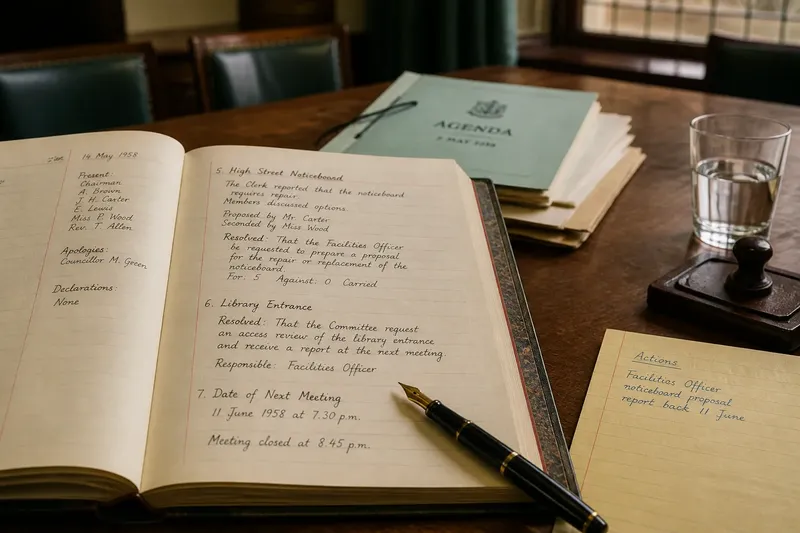
The Agenda Is Not the Decision: Reading a Meeting Paper Without Jumping Ahead
Reading a meeting agenda carefully helps you distinguish a proposal from discussion and a recorded decision before sharing or acting on public information.
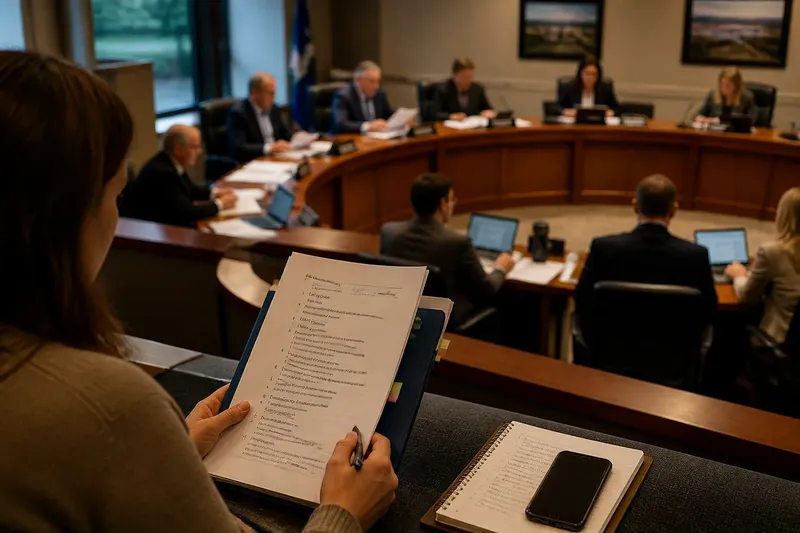
An agenda item is not proof that a county board has approved a proposal. Reading a meeting agenda carefully means tracking what the paper proposes, what members discuss and what the official record later says happened. That distinction matters when a notice concerns a library service, a road, a grant or a change to a public facility: the heading may sound decisive while the decision remains ahead.
Start with the agenda’s purpose
An agenda is a plan for a meeting, not a transcript or a list of completed actions. It tells members and the public what business is scheduled, often in an order set by the clerk or chair. An item may be there so officials can receive information, hear public comments, consider options or take a vote. Its presence alone does not establish which of those will happen.
Begin by checking the meeting date, body name and agenda version. County board, planning commission and library trustees may deal with related subjects but have different authority. A revised agenda can also replace an earlier one, so use the current version posted by the relevant county office rather than a copied extract or an old email attachment.
Then read the item title alongside its supporting paper. A heading such as “Community centre lease” could refer to a staff report, a proposed agreement or a request for authority to negotiate. Look for verbs in the agenda text and report: “receive”, “discuss”, “consider”, “recommend” and “approve” describe different actions. Even “approve” is a proposed action until the meeting record confirms what members did.
Follow the item through the week
A simple routine helps prevent an agenda from being mistaken for an outcome. For a meeting later in the week, use these points as the papers appear and the record catches up:
- When the agenda is published: identify the responsible body, meeting date and item number. Save the official link, not just a screenshot with no context.
- Before the meeting: open the staff report, attachments and any draft resolution linked to the item. Note whether they describe a recommendation, an option or a decision already made under delegated authority.
- On the meeting day: check for a revised agenda and note whether the item is reached, postponed or taken in a different order. If watching a stream, treat what you hear as evidence of discussion, not a substitute for the formal record.
- After the meeting: look for a published action summary or draft minutes. Record the wording of the motion and any amendment, rather than reducing the result to the original agenda heading.
- When approved minutes appear: compare them with your note and check any stated conditions, referrals or follow-up dates. If the official record is unclear, ask the clerk which document records the action.
Say you see “Consider renewal of the Riverside Hall booking agreement” on a county committee agenda. The attached report recommends renewal, but during the meeting a member moves to defer the item while staff clarify access terms. The expected observable result in the later record is a deferral rather than a renewal; sharing the report’s recommendation as an approved agreement would get ahead of the decision.
Separate proposal, discussion and outcome
These stages can appear close together on a meeting page, but they answer different questions. The proposal explains what staff, a committee member or an outside party wants the body to consider. Discussion shows how members respond, what questions they raise and whether they request changes. The outcome records the action the authorised body took, if any.
A staff recommendation is not necessarily the body’s choice. Members may amend it, reject it, defer it, refer it elsewhere or take no action. A committee may recommend something to the full county board without making the final decision itself. Likewise, a public comment period can influence the discussion without constituting a vote or binding the body to a particular result.
When a motion is reported, read its full wording and the result. “Approved as amended” differs from approval of the original proposal; “continued to a future meeting” means the matter remains open. If the minutes say “carried”, check what motion carried and whether conditions were attached. The item title is a useful locator, but the motion and record are better evidence of the decision.
Check what the record can and cannot tell you
Meeting materials have different levels of finality. A draft resolution may be proposed language. A staff report may describe a preferred option. Draft minutes are subject to approval and correction, while approved minutes are the formal account maintained by the body. An action log or meeting summary can be easier to scan, but it may omit the precise wording or procedural detail.
For a consequential question, use the county’s official meeting page to compare the agenda, attachments, minutes and any recorded vote or resolution. If these documents seem to conflict, do not infer an outcome from whichever is easiest to find. The clerk or relevant office can identify the controlling record and explain whether a later approval or signature is still required. Requirements depend on the body’s rules and applicable local procedures.
What should you check after the meeting?
Does “recommended” mean approved?
No. A recommendation is advice or a proposed course of action for the decision-making body. Check whether that body considered it and what action the minutes record.
What if the item was discussed but no vote appears?
The body may have taken no formal action, deferred the matter or asked for further work. Check the minutes and action summary for a motion, referral or return date before describing the matter as decided.
Can a committee make the final decision?
Sometimes, but a committee may instead send a recommendation to a county board or another authority. The agenda, committee remit and recorded motion indicate which role applies; ask the clerk if the route remains unclear.
Which document should I cite when sharing the result?
Use the official minutes or resolution for the recorded outcome, and link to the agenda or report when explaining the proposal. If only a draft record is available, say so plainly and avoid presenting its wording as settled.
Share the status as carefully as the subject
When passing information to neighbours or a local group, lead with the status: proposed, under discussion, deferred or approved. Include the meeting body and date, then link to the relevant official document. This small piece of context helps readers distinguish an idea being considered from a decision that can be acted on.
Reading a meeting agenda carefully is not about anticipating what officials will decide; it is about keeping each stage in its proper place. A useful habit is to leave a note beside an unresolved item and return when the formal record appears. That pause is often enough to keep a plausible headline from becoming an inaccurate account of county business.